 (Image via
Our bodies are equipped with a remarkable ability to heal. When you get a paper cut, your skin stitches itself back together. When you break a bone, it slowly mends and becomes strong again. This natural repair process is one of the marvels of biology. But what happens when the damage is too severe or the tissue is too specialized to fix itself? What if a heart is damaged by a heart attack, a brain is affected by Parkinson's disease, or a pancreas stops producing insulin? For a long time, these conditions were considered permanent. Regenerative medicine, powered by stem cell research, is aiming to change that. Stem cells are the body's raw materials—master cells from which all other specialized cells are generated. Scientists are now learning how to direct these powerful cells to repair, replace, and restore damaged tissues and organs, opening up a new frontier in medicine that was once the stuff of science fiction.
What Exactly Are Stem Cells?
Before diving into the breakthroughs, it is helpful to understand what makes stem cells so special. Think of them as the body's "blank slate" cells. They have two unique properties. First, they can divide and renew themselves for long periods. Second, under the right conditions, they can be coaxed into becoming specialized cells with specific functions, like a muscle cell, a blood cell, or a brain cell. This process is called differentiation.
There are different types of stem cells. Embryonic stem cells, which come from embryos, are "pluripotent," meaning they can become any type of cell in the body. Adult stem cells, found in small numbers in most adult tissues like bone marrow or fat, are generally "multipotent," meaning they can only turn into a limited range of cell types. For years, research was controversial because it often involved embryonic cells. However, a Nobel Prize-winning discovery allows scientists to reprogram regular adult cells (like a skin cell) back into a pluripotent state. These are called induced pluripotent stem cells (iPSCs), and they have revolutionized the field by providing an ethical and personalized source of stem cells for research and therapy.
Repairing Damaged Hearts
A heart attack occurs when blood flow to the heart muscle is blocked, causing a part of the muscle to die. The heart cannot regrow this lost muscle, and the resulting scar tissue makes it weaker, which can lead to heart failure.
Researchers are now using stem cells to try to regenerate this damaged tissue. In clinical trials, scientists are injecting stem cells directly into the heart's scar tissue. The hope is that these cells will differentiate into new, healthy heart muscle cells, replacing the damaged ones. While the results are still being studied, early trials have shown modest improvements in heart function.
Beyond just replacing cells, scientists have found that stem cells also release helpful proteins that reduce inflammation, prevent existing heart cells from dying, and encourage the growth of new blood vessels. This supportive effect, known as the paracrine effect, may be just as important as the cell replacement itself.
Treating Autoimmune Diseases
In autoimmune diseases like multiple sclerosis (MS) or Crohn's disease, the body's immune system mistakenly attacks its own healthy tissues. The goal of stem cell therapy in this context is not to regrow an organ, but to "reboot" the faulty immune system.
The most common approach is called Hematopoietic Stem Cell Transplantation (HSCT). It is an intense procedure. First, a patient's own hematopoietic (blood-forming) stem cells are collected from their bone marrow or blood. Then, the patient undergoes chemotherapy to wipe out their existing, misbehaving immune system. Finally, their own stem cells are infused back into their body.
These fresh stem cells then rebuild a brand-new immune system from scratch, one that hopefully doesn't have the same "memory" of attacking the body. For some patients with severe, aggressive MS, this procedure has been able to halt the progression of the disease and, in some cases, even reverse some of the disability.
Restoring Sight to the Blind
Age-related macular degeneration (AMD) is a leading cause of blindness in older adults. It occurs when a layer of cells in the retina, called the retinal pigment epithelium (RPE), starts to die off. These RPE cells are essential for the health of the light-sensing photoreceptor cells that allow us to see.
Using iPSCs, scientists can take a patient's own skin or blood cells, reprogram them into stem cells, and then guide them to become new RPE cells in a lab dish. These newly grown RPE cells can then be transplanted into the patient's eye. The goal is for these new cells to replace the dead ones, support the remaining photoreceptors, and stop the progression of vision loss. Early clinical trials have shown that this procedure is safe and has been able to restore some vision in a few patients, offering incredible hope for a condition that was previously untreatable.
Lab-Grown Organs
One of the most ambitious goals of regenerative medicine is to grow entire organs in the lab for transplantation. This would solve the chronic shortage of donor organs and eliminate the risk of organ rejection, as the new organ would be grown from the patient's own cells.
While we are still a long way from printing a fully functional heart or kidney on demand, the progress is astounding. Scientists are using 3D printing technology to build "scaffolds" in the shape of an organ. These scaffolds are then "seeded" with a patient's stem cells, which are encouraged to grow and differentiate into the correct cell types.
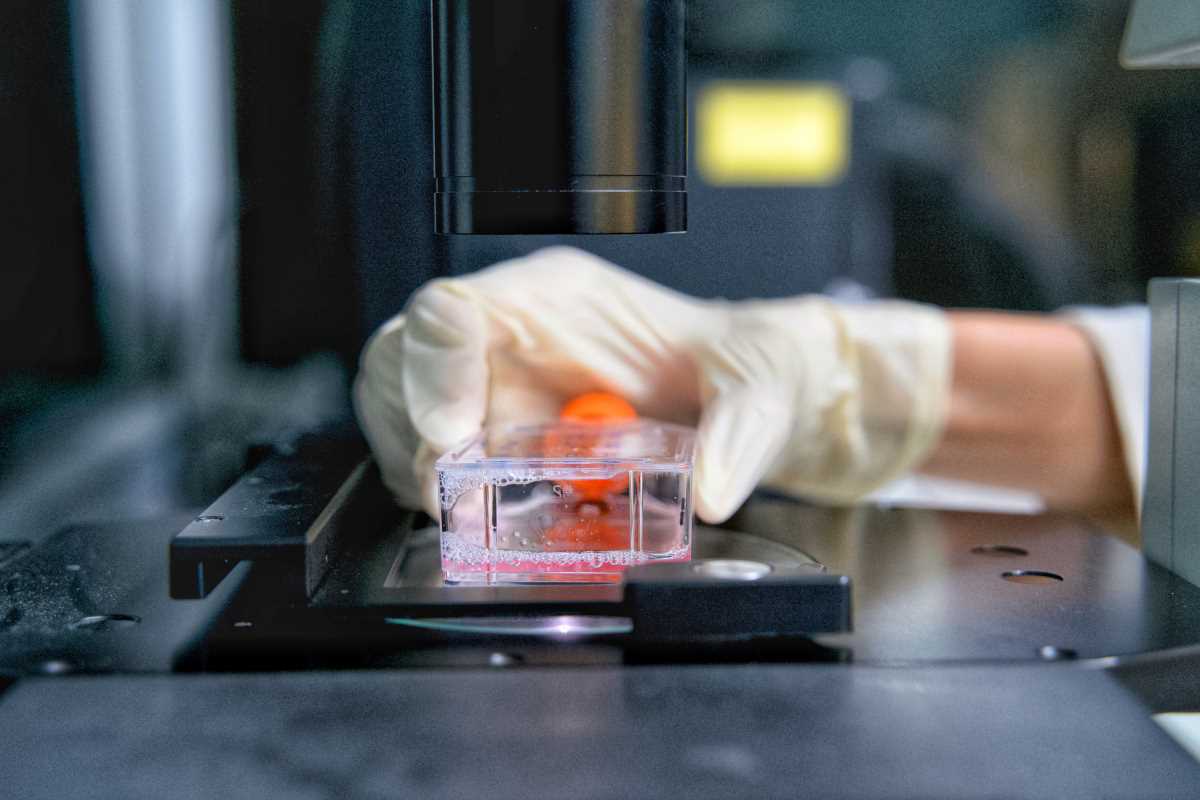
Researchers have already had success growing simpler tissues, like skin for burn victims and bladders. These "organoids," or mini-organs, are also invaluable research tools. By growing a miniature version of a patient's liver or brain in a dish, scientists can test how they will react to a new drug without ever having to administer it to the person.

.jpg)